There’s no one with a phone!
I’d very much like to share with you, reader, some observations about our times and a few questions about photography. Since childhood, I’ve been fascinated by this incredible form of human expression. For many years I’ve dedicated my life not only to photographing, but to everything photography brings. I believe there is art in photography — poetry, movement; there is abstraction, messages; there are texts, accounts; there is restlessness, action, peace, comfort; there is in it something that only philosophy can reveal. Perhaps photography is so complex that we still don’t grasp the true dimension of its power!
The word photography means to draw with light. Many speak of various aspects of its nature and its power! If we look more deeply, we arrive at something extraordinary. Photography is the art of freezing light, time and space, immortalising them on a piece of paper. Take a photograph, look at it closely. You won’t see only an image; you’ll see a moment in time, containing a piece of our space which, through light, was used in that instant to be fixed there. It’s an account of something that truly happened, a present reality coming from the past. Every photograph is a journey to the past, from the very instant it was taken. And it can never be the same again. Yes — a photograph is a moment in time that was recorded and truly existed, and continues to exist in the present, even though it comes from the past. Photography carries emotion; it is loaded with meanings and an infinite range of interpretations, for in each person it has the ability to awaken something unexpected.
What if you had no way at all to portray everything happening around you? What if you had no chance to record an important moment in your life? What would your life be like today without this technology? In the early days of our existence, we didn’t have the technologies needed for such a thing. After years of evolution, our species took its first steps toward the abstract, depicting on cave walls and the rocks around their primitive dwellings the situations of their daily lives and events of great importance at the time.
Our need for expression is as primitive as communication itself, and all of it has been evolving. In more remote times, photography was a peculiar event. People gathered to take a photo; it was truly an occasion. After some years, it began to become popular — though with its restrictions. Photography came to be seen as a form of art, especially by photographers who began to use it as such.
Today photography has become more popular than ever; everything revolves around photos and videos. We’ve developed a need to show everything we do; we want to share with our friends, family and people who don’t even know our routine. Social media and technology accelerate our hunger to photograph. No one would have imagined someone photographing an egg at breakfast right at the start of this incredible discovery. Photographing was expensive; it required a great deal — much knowledge and technique — something that couldn’t be wasted on a photo of something so ordinary. I’m not against what people do today, but I miss the romanticism that’s gone. Sitting down and opening a photo album, pausing for a coffee and recalling the past. Remembering special moments and reliving all the emotions they held.
Today we are trapped in this great wave of wanting to feel popular, of seeking the approval of people we don’t even know — likes, comments, views, and so on. We’ve become extremely immediate. I don’t know if this is truly progress; I ask myself every day whether we’re heading in the right direction! Before, we waited for the album to arrive, with butterflies in our stomach, to find out what was ahead, to recognise ourselves, to see everything we had recorded in order to remember what we lived. Today we wait for an immediate reward; we want everything right now! Did photography change, or did we change photography? Today we’re not seeking to relive what we lived, but to show what we’re able to live. Is that photography’s fault? Or are we losing ourselves with this fantastic form of expression? Are we really using it to its full potential? Do we need to reflect on what we’re doing with our lives?

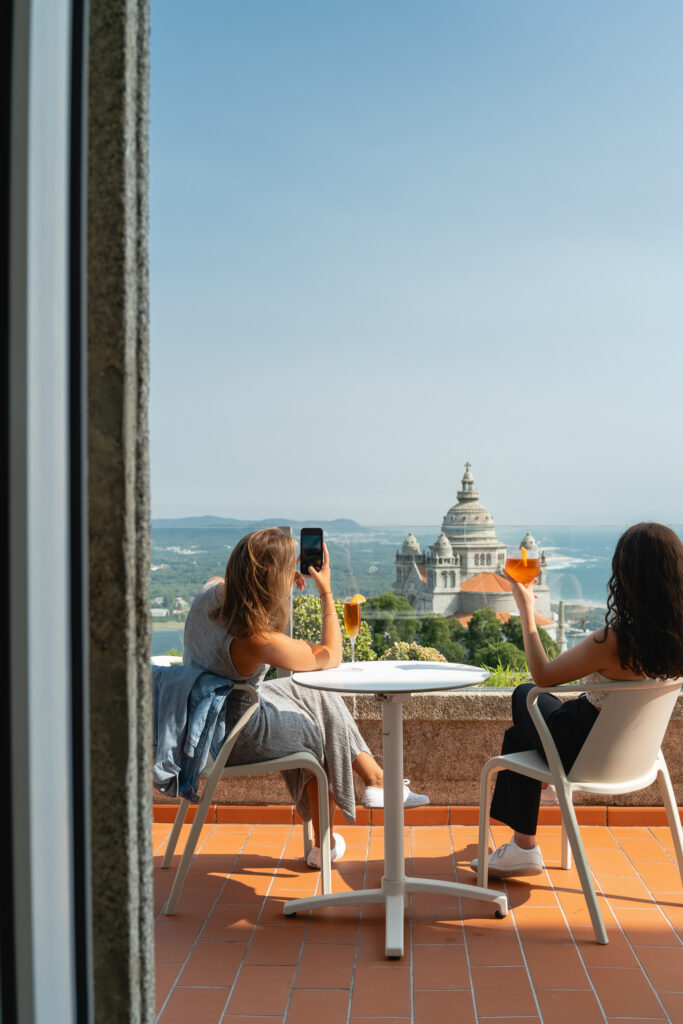
There’s no one photographing the lake with a phone!
Never in history have we reported so many cases of anxiety and depression. Experts state that much of this is due to the high degree of exposure we’re receiving. Let me be very clear: I’m not against social media, or even people who photograph an egg at breakfast — I’ve done it myself, I use social media. I love everyday photography, I love photographing food and random things. And that’s exactly why I’m writing about this subject. It’s not photography, it’s not the film, it’s our vanity, our desire to assert ourselves within our communities, within our social circles, that is causing all this confusion. It’s called social approval. Perhaps our excesses are destroying an entire generation. We’ve lost the ability to create our own desires, instead desiring what other people are living. Constantly influenced by those who live in the slavery of daily, immediate content. Many people have stopped buying books, instead reading short snippets of shallow content written by experts trained by their marketing teams. I in no way condemn those who create content — it’s not about who creates, or who watches, nor about the quality of the content itself, but rather about those who don’t understand what it represents. I hope you’re following my reasoning; I don’t want to judge anyone, but to raise an alert, a simple reflection, so that all we absorb today is not a trigger for sadness but for hope. Many people see themselves at rock bottom, believing their life is dull, because they constantly see others on beautiful trips, laughing, happy, eating, drinking, showing off their lovely homes, their luxury cars, what they earn, what they own, and so on. I’m glad to see happy people, but there are those who don’t know how to deal with such situations. They start to snowball, they stop seeing that their life can hold great value, comparing their own life to other people’s. Justifying their failure through someone else’s success. Blaming themselves for not being able to experience so much.
I find social media incredible; I think these tools that connect people are fantastic. We now have the chance to see the whole world — cultures, cuisine, architecture, lessons, fun — we have the chance to travel to other places in an instant. We have the chance to show our work, express our opinions, teach and share such important information. It provides all this through photography and videography. I believe that if we know how to keep balance and don’t live trapped solely in it, we can grow and learn a great deal from one another. We have to set filters, ration our time, never forgetting that real life isn’t in there. Reality is told by humans disconnected from the internet. That is someone else’s life, not yours!
Pay attention! Most people don’t make a record of something — they want to display something. There’s a difference between recording something and displaying it. Is happiness really about displaying everything we do? Many do it for the memory; others for the sake of showing off, and deep down they know it wasn’t to remember one day, but to assert that they’re here or there, eating this or that, buying this or that. In this way we can see it wasn’t about the record, it was about the desire to be seen. We’ve come to use photography and videography, in many cases, no longer as a tool for recording or creating art, but as a tool to feed our ego. To feed vanity, pride, and to try to place ourselves above those less fortunate. Remembering that not everyone does this, and that everything depends on the interpretation of the one who’s looking.
If we open our eyes, we’ll see that this is more real than we imagine — and I’ve done it myself many times. I deeply wish to grow beyond this dependence, created unconsciously by the vain competition of many, which ends up contaminating much of the population. Let me describe something so you can get a small idea of what I mean. On Grandparents’ Day, many take a beautiful photo, smiling, with the family together. Someone on the outside thinks, how lovely, I’d like my family to be like that too. In reality, that was just an image, creating a message of happiness, brotherhood and unity. The grandparents stayed, as usual, in a rocking chair, watching their children and grandchildren spend the day with a phone in hand. They didn’t hear stories, nor reach for the photo albums, didn’t ask for advice, nor give due attention to those who need it so much. They took photos of the plate, the drinks, the dessert, and finally gave a goodbye hug, thinking they had been there — but they hadn’t; they were connected with others doing the same.
I just want to leave a simple reflection on the importance of photography, on how we’re using it, and on how we can keep ourselves in check with its use. It’s something so incredible that today we buy a voice-communication device and the first requirement is to know whether it has a good camera, whether it’s fast, whether it has plenty of storage — we don’t even stop to notice that its purpose is for us to call one another.
Start printing your photos, sit together, contemplate that moment lived in the past, joyful in the present for having the chance to relive everything experienced so far. Don’t let your lives be reduced to images trapped on some social network. A photograph truly becomes a photograph when it is printed.